Intranet Alternatives: 7 Tools for HR Comms Teams

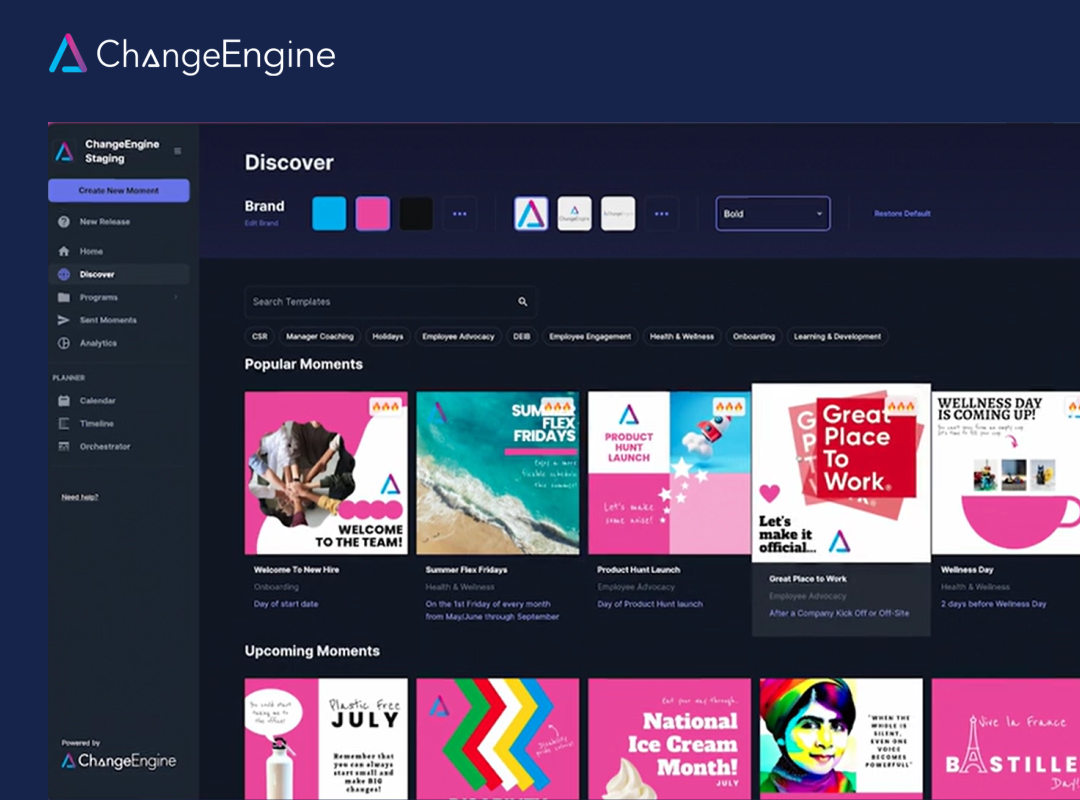
The best intranet alternative depends on why your intranet failed. If it failed because nobody visited it, another intranet will not fix that.
The fix is communications that reach people where they already work: email, Slack, Teams and SMS. That is what ChangeEngine does for HR and People teams. If you still need a searchable place to store documents and policies, a modern intranet like Staffbase or Simpplr is the better-built version of what you already have.
Most intranets do not fail because they were badly built. They fail because people stop visiting them. Content goes stale, ownership gets murky, search stops surfacing anything useful, and within a year employees have quietly gone back to email and chat. The intranet is still there. It is just empty.
So when HR and comms teams go looking for intranet alternatives, there are really two different things they might be looking for, and picking the wrong one wastes a year. This guide covers both, names which tools fit which need, and is honest about where each one falls short, including our own.
First, work out which kind of alternative you need
An intranet does two jobs that are easy to confuse. It is a place to keep things, policies, forms, documents, an org chart, and it is a way to tell people things, announcements, updates, campaigns. Most intranet projects fail on the second job while the first quietly works fine.
Three questions sort out what you actually need to replace:
- Did people stop reading your updates, or stop finding your documents? If updates stopped landing, you have a reach problem, not a storage problem. A prettier destination will not solve it.
- How much of your workforce sits at a desk? If a large share is frontline or deskless, any tool that assumes a company laptop and inbox has already lost most of your audience.
- Who owns it day to day? An intranet needs constant curation to stay alive. If you do not have someone to own that, buying another one repeats the failure.
If your honest answer is that updates stopped landing and nobody has time to tend a destination, the alternative you want is not another intranet at all. It is a way to push communications to where people already are.
The 7 best intranet alternatives at a glance
The 7 best intranet alternatives
1. ChangeEngine: best for HR and People teams whose intranet died on adoption
ChangeEngine is the alternative for teams that have accepted the hard truth: the destination was the problem. Instead of asking employees to remember to visit a page, it sends internal comms to the channels they already open, email, Slack, Teams and SMS, and reports on who actually opened, clicked and acted.
For HR and People teams specifically, the difference is that it produces the communications, not just schedules them. The AI Content Studio generates branded announcements, campaigns, newsletters and posters from a short prompt. The Journey Builder triggers them off HRIS events, so a policy change or a new starter fires the right message automatically. This is the marketing-automation approach applied inside the company: one message becomes an email, a Slack post, a poster and an SMS, measured end to end.
It fits the classic dead-intranet trigger well: a distributed or frontline workforce, a lean People team, and a SharePoint or Simpplr instance nobody opens. Teams reach 5x faster program adoption because the message goes to people rather than waiting for them to come to it.
Standout: It reaches frontline and deskless staff through SMS and posters, the people a browser-based intranet never reaches.
Watch out for: It is not a knowledge base. ChangeEngine does not store and index documents or run a searchable policy library, so if that half of your intranet is working and worth keeping, pair ChangeEngine with it rather than expecting a full swap. It also needs a connected HRIS to trigger journeys, and it fits organizations of roughly 500 employees and up.
2. Staffbase: best for enterprise internal comms teams
Staffbase is built for internal communications professionals rather than IT, which makes it the closest intranet-style tool to a comms mindset. It combines a branded employee app, email newsletters, a traditional intranet and digital signage, with analytics across all of them.
It has strong adoption among large enterprises, particularly in Europe, and the branded app gives it a route to frontline staff that a pure browser intranet lacks.
Standout: Multi-channel publishing from one place, with genuine measurement, which most intranets bolt on as an afterthought.
Watch out for: It is an enterprise platform with enterprise pricing and setup. For a mid-market team it can be more system than the problem requires, and the app still asks employees to adopt a new destination.
3. Simpplr: best for desk-based knowledge workers
Simpplr has positioned itself as the AI-native modern intranet and is recognized as a leader by Gartner and Forrester. It focuses on personalized content delivery, clean design and automated governance, which directly targets the two things that kill older intranets: irrelevance and content rot.
For a mostly desk-based, knowledge-worker population, it is one of the strongest intranets available and its search and personalization are a real step up from legacy SharePoint.
Standout: AI-driven personalization and automated governance that keep content current without constant manual curation.
Watch out for: It is still an intranet, so it still relies on people choosing to visit it, and its sweet spot is desk-based knowledge workers rather than frontline teams. Pricing is custom and aimed at mid-to-large enterprise.
4. Workvivo: best for community and engagement culture
Workvivo, owned by Zoom, takes the social-feed approach to the intranet. It is built around community, recognition and a familiar social experience rather than a document tree, which drives higher day-to-day engagement than a traditional intranet for the right culture.
If your goal is a livelier, more connected employee experience and your workforce is largely online, it lands well.
Standout: A social feed employees actually engage with, which lifts the participation that legacy intranets struggle to earn.
Watch out for: The engagement-feed model suits culture-building more than structured, must-read comms, and it is still a destination employees have to open. Measurement of whether critical messages reached everyone is weaker than a comms-first tool.
5. SharePoint + Microsoft Viva: best for organizations committed to Microsoft 365
SharePoint is the most widely deployed intranet in the world, mostly because it comes bundled with Microsoft 365. Adding Microsoft Viva layers on engagement, learning and insights. For an organization already all-in on Microsoft, the integration and the marginal cost are both hard to beat.
It is often, ironically, the intranet people are trying to replace, but a well-configured SharePoint plus Viva setup is a legitimate answer for the right shop.
Standout: Deep Microsoft 365 integration and no separate license to buy if you already run M365.
Watch out for: This is usually the platform that failed on adoption in the first place. It needs significant IT investment to configure and maintain, and out of the box it does little to solve the reach problem that sent you looking for alternatives.
6. Connecteam: best for frontline and deskless-only teams
Connecteam is mobile-first and built for deskless workforces, pairing a lightweight intranet-style hub with scheduling, time tracking and task management in one app. For a retail, hospitality or field operation with no company email, meeting people on their phones is the entire point.
It is genuinely strong at the frontline problem and priced for that segment.
Standout: A mobile hub that reaches hourly and field staff a browser intranet never could.
Watch out for: It is frontline-first and does not span desk and frontline populations well from a single experience. Organizations with both will likely run it alongside something else, and employees still have to download and log into the app.
7. Jostle: best for small teams wanting something simpler
Jostle deliberately sits in the middle ground: a simpler, lighter employee hub for organizations that want to move away from intranet sprawl without adopting another complex system. For a smaller team overwhelmed by a bloated SharePoint, the reduced surface area is the appeal.
It is easier to launch and maintain than a full enterprise intranet, which matters if nobody owns the platform full time.
Standout: Low maintenance burden and a gentle learning curve for teams without a dedicated intranet owner.
Watch out for: Simplicity comes with a ceiling. It is still a destination, its reach into frontline populations is limited, and larger or more complex organizations will outgrow it.
How we chose these tools
Intranet alternatives split into two camps, and a single ranking would hide that. These seven were chosen to represent the real decision, against four tests:
- Solves a named failure. Each tool addresses a specific reason intranets die: adoption, frontline reach, content rot, or maintenance burden.
- Honest about its type. Reach-based tools and destination-based intranets are labelled as what they are, not blended into one vague category.
- Proven at mid-market scale, roughly 500 to 10,000 employees, where a dead intranet is a common and expensive problem.
- Reaches the whole workforce, or is clear about where it cannot. Frontline coverage is called out for every tool.
ChangeEngine publishes this guide, so its entry states plainly where it does not fit: it is not a document repository, and it needs an HRIS connected.
Frequently asked questions
What is the best alternative to a company intranet?
The best alternative depends on why the intranet failed. If updates stopped reaching people, a reach-based comms tool like ChangeEngine that sends to email, Slack, Teams and SMS solves the adoption problem directly. If you mainly need a better-built knowledge hub, a modern intranet like Simpplr or Staffbase is the stronger version of what you have.
Why do intranets fail?
Intranets usually fail on adoption rather than design. Content ages, ownership becomes unclear, and search stops returning anything useful, so employees drift back to email and chat within about a year. The platform still exists, but it is no longer where anyone looks, which is a reach problem a new destination cannot fix on its own.
Can you replace an intranet with Slack or Teams?
Slack and Teams handle conversation well but are poor at structured, must-read internal comms, where important messages scroll away in minutes. A better model keeps Slack and Teams for chat and layers a comms tool on top that targets, schedules and measures official announcements across those same channels, so nothing critical gets lost in the feed.
Is ChangeEngine an intranet replacement?
ChangeEngine replaces the communications half of an intranet, not the document-storage half. It reaches employees where they already work and measures what landed, which is the part most intranets fail at. If you still need a searchable knowledge base, ChangeEngine pairs with one rather than replacing it wholesale.
What is the best intranet alternative for frontline workers?
For a purely frontline workforce, a mobile-first app like Connecteam meets hourly staff on their phones. For organizations with both frontline and desk employees, a reach-based tool like ChangeEngine is stronger, because it delivers the same message by SMS and poster to frontline staff and by email, Slack or Teams to desk staff from one program.
About ChangeEngine
ChangeEngine is marketing automation for HR and People teams. Rather than asking employees to visit an intranet, it sends internal comms to email, Slack, Teams and SMS, triggered off HRIS events and measured end to end. One message becomes a branded email, a Slack post, a poster and an SMS. ISO 27001, SOC 2 and GDPR compliant, with integrations across Workday, ADP, BambooHR and 75+ others.
Book a demo to see comms reach your whole workforce without another login.