
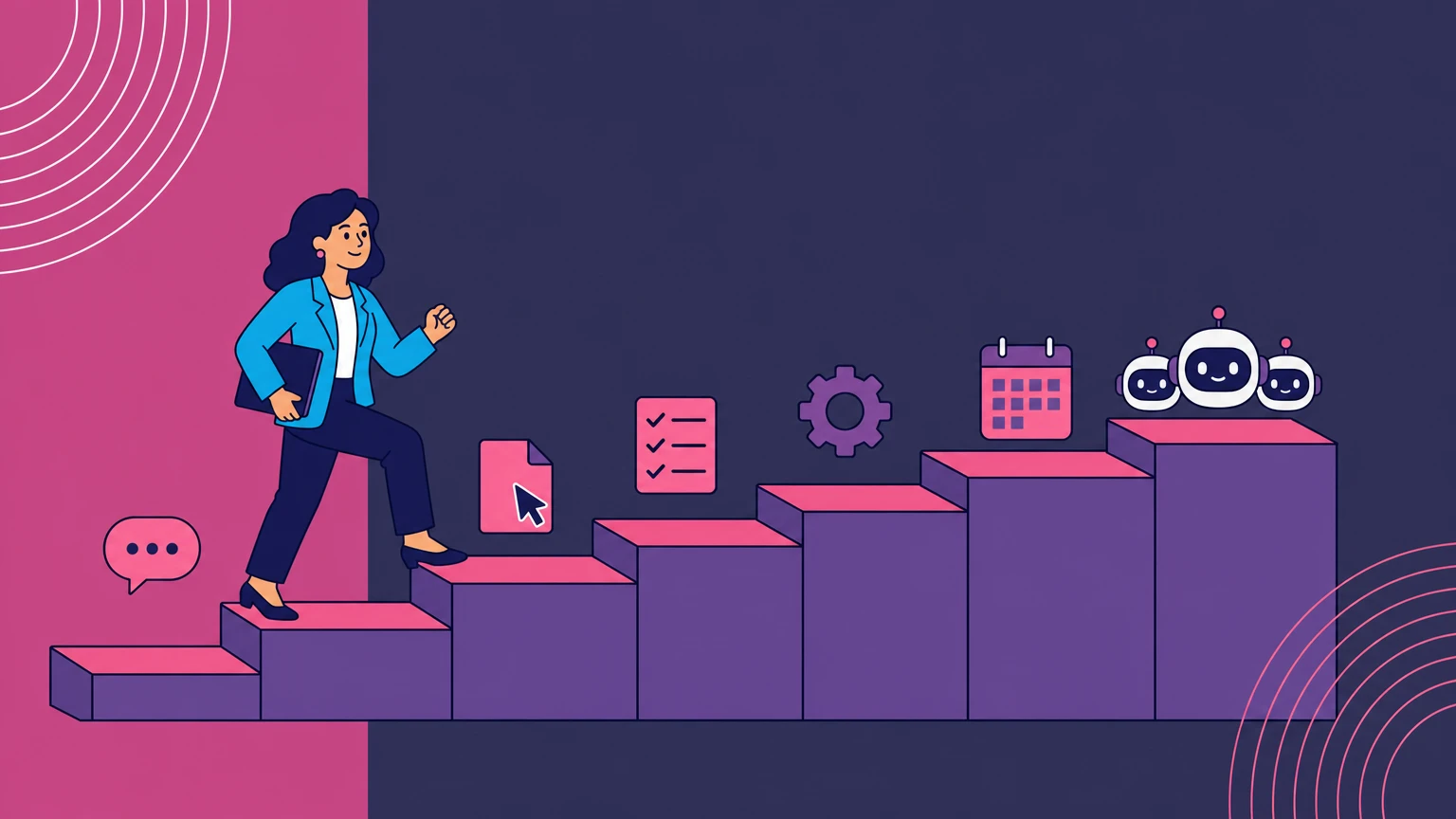
Most People teams use AI the same way: open a chatbot, paste something in, copy the answer out. That's a fine start. It's also Level 1 of 7.
A useful way to map it is by how much work you hand to AI, from asking a chatbot a question to running a team of agents that report back to you. The useful part for HR is the rule that comes with it: a higher level isn't automatically better. The right level for any task depends on two things.
- How much you trust the AI to work without you checking each step.
- How costly a mistake would be.
That second question carries more weight in HR than almost anywhere else. A typo in a marketing email is embarrassing. A wrong number in an offer letter, a benefits deadline that's off by a week, or employee data pasted somewhere it shouldn't go is a real problem for real people. So the goal isn't to race to Level 7. The goal is to know where each of your tasks belongs, and to check every quarter whether something could move up one rung.
Most People teams work at Levels 1 to 3 today. Levels 4 to 7 are where engineers live now, and where HR ops is heading next.
Level 1: Chatbot
You ask, it answers. The AI isn't connected to your files or systems.
- In a People team: Turn your rough notes from a manager sync into a clean recap. Summarize a 20-page benefits policy, then ask who it affects and where the confusing questions will come from.
- Your job: Check every fact against the source document. Ask the model to flag anything it wasn't sure about. Keep employee health, absence, ID and pay details out of the chat window.
- Move up when: The answers are good, but you spend half your time copying and pasting between tabs.
Level 2: Copilot
The AI works inside the file you're already in: Gemini in Google Docs, Copilot in Outlook, Claude in Excel.
- In a People team: Rewrite the remote work section of the handbook in place, at an eighth-grade reading level. Fix the broken formulas in your headcount planning sheet without exporting anything.
- Your job: Review each suggestion before you accept it. You're still the one typing "yes."
- Move up when: You keep running the same multi-step task by hand, one file at a time.
Level 3: Agent
You describe the whole task. The agent works through it step by step and asks before each next move.
- In a People team: "Build week-one comms for our new hire cohort: a welcome email, a Slack intro, a manager checklist and a day-one agenda." The agent drafts each piece and checks in before moving to the next.
- Your job: Approve or redirect at every step. This is the right level for most HR work today.
- Move up when: You approve nine steps out of ten without changes, and the task is easy to undo.
Level 4: Autopilot
You skip the approvals, let the agent finish, then review the result.
- In a People team: Build a manager toolkit page for review season, with timelines, talking points and FAQs, then review the finished draft in one pass.
- Your job: One careful review at the end. Keep this to work that's low-stakes and reversible. Offer letters and comp changes stay at Level 3.
- Move up when: You keep catching the same kinds of mistakes in your end review.
Level 5: Workflows
You build a system that checks and improves the agent's output before it reaches you.
- In a People team: Every draft runs through the same checks before anyone sees it: brand voice, reading level, inclusive language, accessibility and a policy cross-check against the current handbook.
- Your job: Design the checks once, then tune them when something slips through.
- Move up when: Your workflows are reliable enough that you'd rather they started on their own.
Level 6: Assistant
The agent works in the background without being asked.
- In a People team: It watches HRIS events and drafts a work anniversary note a week before the date. It flags a pulse survey with low response in one region and drafts a reminder for that team. It has Monday's people digest ready before you log in.
- Your job: Set the boundaries for what it can start on its own, and review what it hands you.
- Move up when: One assistant isn't enough to cover everything you want running.
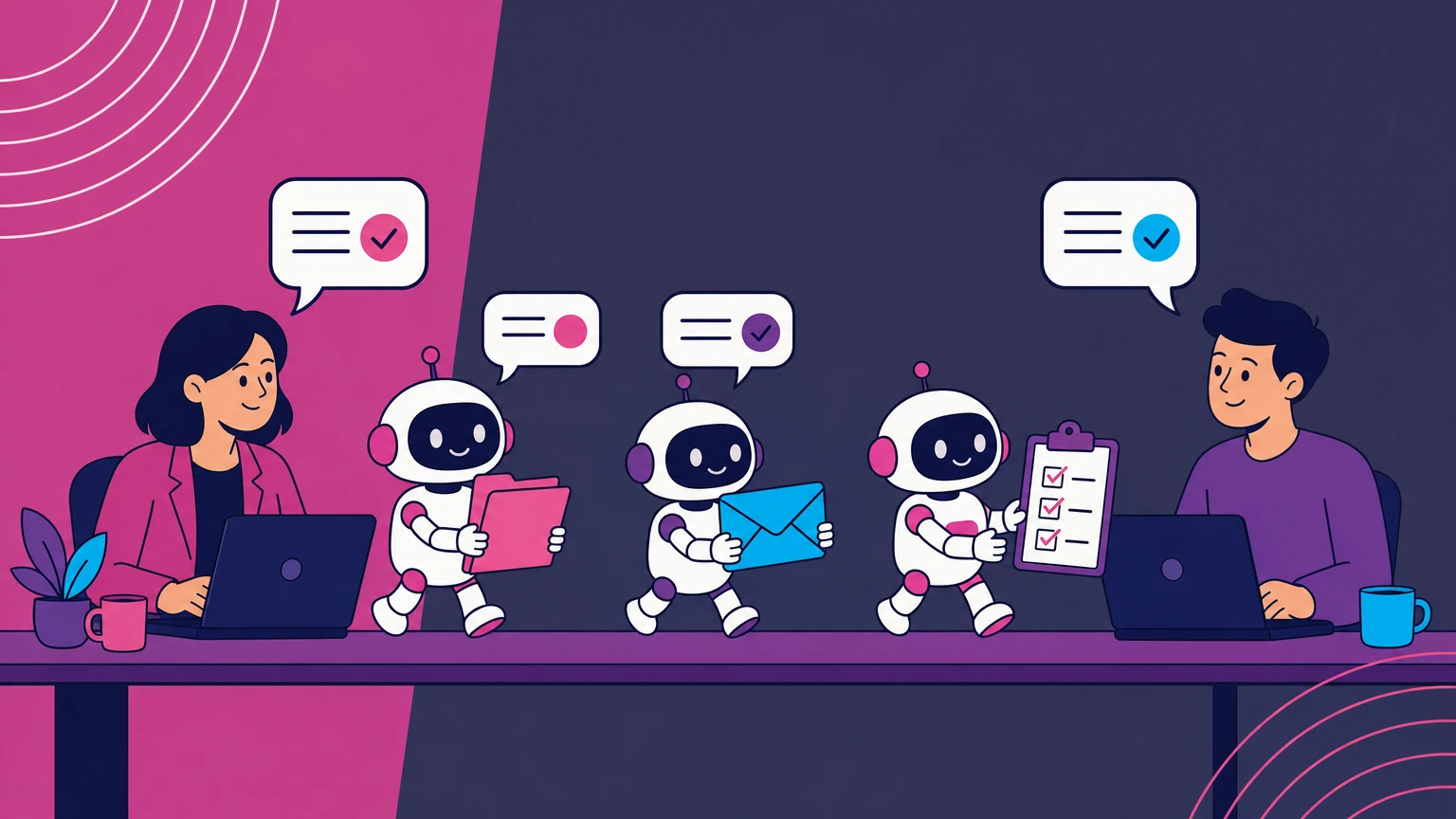
Level 7: Agent team
You run several long-running agents at once, or hand a big goal to a manager agent that splits it up and runs the team for you.
- In a People team: One agent runs onboarding comms, another runs open enrollment, a third writes up survey themes each week. Or you say "Launch our new hybrid work policy," and a manager agent assigns the announcement, FAQ, manager talking points, translations and measurement plan, then reports back with everything ready for review.
- Your job: Set the goal, approve the plan, step in when an agent gets stuck and own the final call. It feels a lot like managing people, and the accountability stays with you.
Find your level, then move up one
Your team doesn't have one level. Each task has its own, set by how much damage a mistake would do. Here's a starting point for common People team work:

- Offer letters, comp changes, terminations: legal, financial and trust damage if wrong. Highest level today: Level 2, Copilot.
- Benefits and open enrollment comms: missed deadlines and wrong coverage decisions. Highest level today: Level 3, Agent.
- Onboarding emails and checklists: a rough first week for a new hire. Highest level today: Level 4, Autopilot.
- Recognition, anniversary and milestone notes: a clumsy message, easily fixed. Highest level today: Level 6, Assistant.
- Survey reminders and engagement nudges: a reminder lands at the wrong time. Highest level today: Level 6, Assistant.
To move up a rung, run this check once a quarter:
- Pick the task you repeat most often.
- Count how often you change the AI's output. If it's rarely, that task is ready for the next level.
- Ask what happens if it goes wrong. If the honest answer is "we fix it in five minutes," move it up. If the answer involves legal, payroll or an employee's trust, keep a human at every step.
- Try the next level on one task for two weeks, then decide.
Write the list down: the work you'd hand off tomorrow, and the work a person will always own. That list is your AI plan.