8 Best HubEngage Alternatives for 2026

The strongest HubEngage alternatives in 2026 are ChangeEngine for People and comms teams who want marketing-grade content and HRIS-triggered automation, Staffbase for enterprises needing an employee app with editorial governance, and Simpplr for organizations whose real requirement is a modern intranet. HubEngage covers a lot of ground cheaply. Most teams leave when breadth turns out to be shallower than they needed.
HubEngage is a multi-channel engagement platform covering an employee app, email, SMS, intranet content and digital displays, with recognition, surveys, instant messaging and an AI chatbot included. It targets frontline-heavy sectors, and it is one of the few vendors in this category that publishes entry-level pricing rather than hiding everything behind a quote.
However, covering eight jobs at that price means none of them go especially deep, and the independent review base is small enough that verifying claims before you sign is harder than it should be. This guide covers eight platforms teams evaluate when depth starts to matter more than breadth.
Why do internal comms teams look for a HubEngage alternative?
HubEngage is a modular employee engagement platform spanning communications, recognition, surveys and instant messaging across app, email, SMS and digital display channels. Teams move away for reasons of depth and evidence rather than price.
Four patterns come up repeatedly:
- Content production is still your job. Broad platforms give you distribution channels and leave the making of the content to you. If your People team is building posters in PowerPoint and rewriting the same message five times, more channels does not fix the bottleneck.
- Lifecycle automation is thinner than it looks. Scheduling a message is not the same as a program that fires off a Workday promotion event, branches by location and follows up. Check that workflow specifically in a demo rather than trusting the feature list.
- Third-party evidence is limited. HubEngage carries a small number of independent reviews compared with the enterprise names in this category. That makes it harder to pressure-test the marketing before committing, and harder to reassure a sceptical CFO.
- Modules multiply. A pick-and-choose model looks flexible at the quote stage and becomes a set of overlapping tools your employees are asked to learn. Reviewers also note minimum-seat requirements that make the per-user headline less useful at smaller counts.
If your requirement genuinely is broad coverage at low cost and you have content resource in-house, HubEngage is a defensible buy. If content production or program automation is the real gap, look below.
The 8 best HubEngage alternatives at a glance
The 8 best HubEngage alternatives: our top picks
1. ChangeEngine: best for marketing-grade content plus HRIS-triggered automation
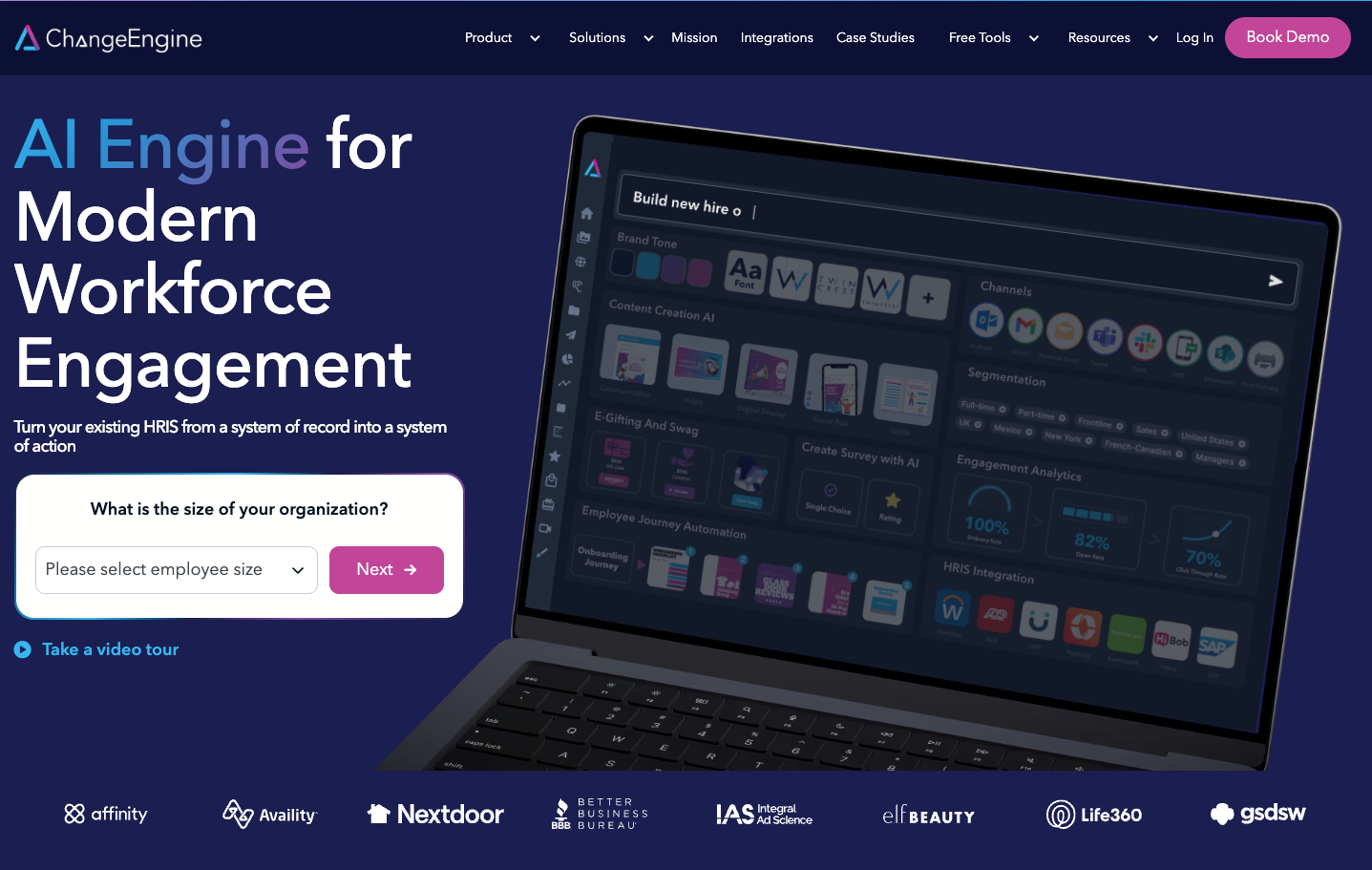
Why we picked it: ChangeEngine attacks the part HubEngage leaves with you. An AI content studio produces the email, the Slack post, the poster and the infographic from a short prompt, on brand, so a two-person People team ships work that looks like marketing made it. Programs then fire automatically off HRIS events rather than being scheduled by hand. The distribution channels matter less than the fact that something good is going down them.
Best for: Organizations of 500 to 10,000 employees with a distributed or frontline workforce, where a named People, Internal Comms or Employee Experience leader owns engagement targets and has no in-house design resource.
Key features: Multi-channel comms orchestration across email, Slack, Teams, SharePoint and SMS with nothing new for employees to log into. HRIS-triggered lifecycle automation on Workday, ADP, BambooHR and Active Directory. An AI content studio with 5,000+ templates and Personal Tone AI for voice consistency. Engagement analytics by department, region, job level or tenure. Recognition automation and a managed swag and e-gifting service.
Results customers report: save around 20 hours per new hire, 5x faster program adoption, and roughly 60% less onboarding admin.
Watch out for: No digital signage and no employee app. If display screens or a branded app are part of your channel mix, HubEngage covers ground ChangeEngine does not. Below 500 employees it is more platform than most teams need, and it costs more than HubEngage at entry level.
Pricing: Quote-based, with entry packages starting at content creation. Live in under two weeks.
Compliance: ISO 27001, SOC 2, GDPR, SSO via SAML or OAuth, and US, EU or Canadian data residency.
2. Staffbase: Best for enterprises needing an employee app with governance
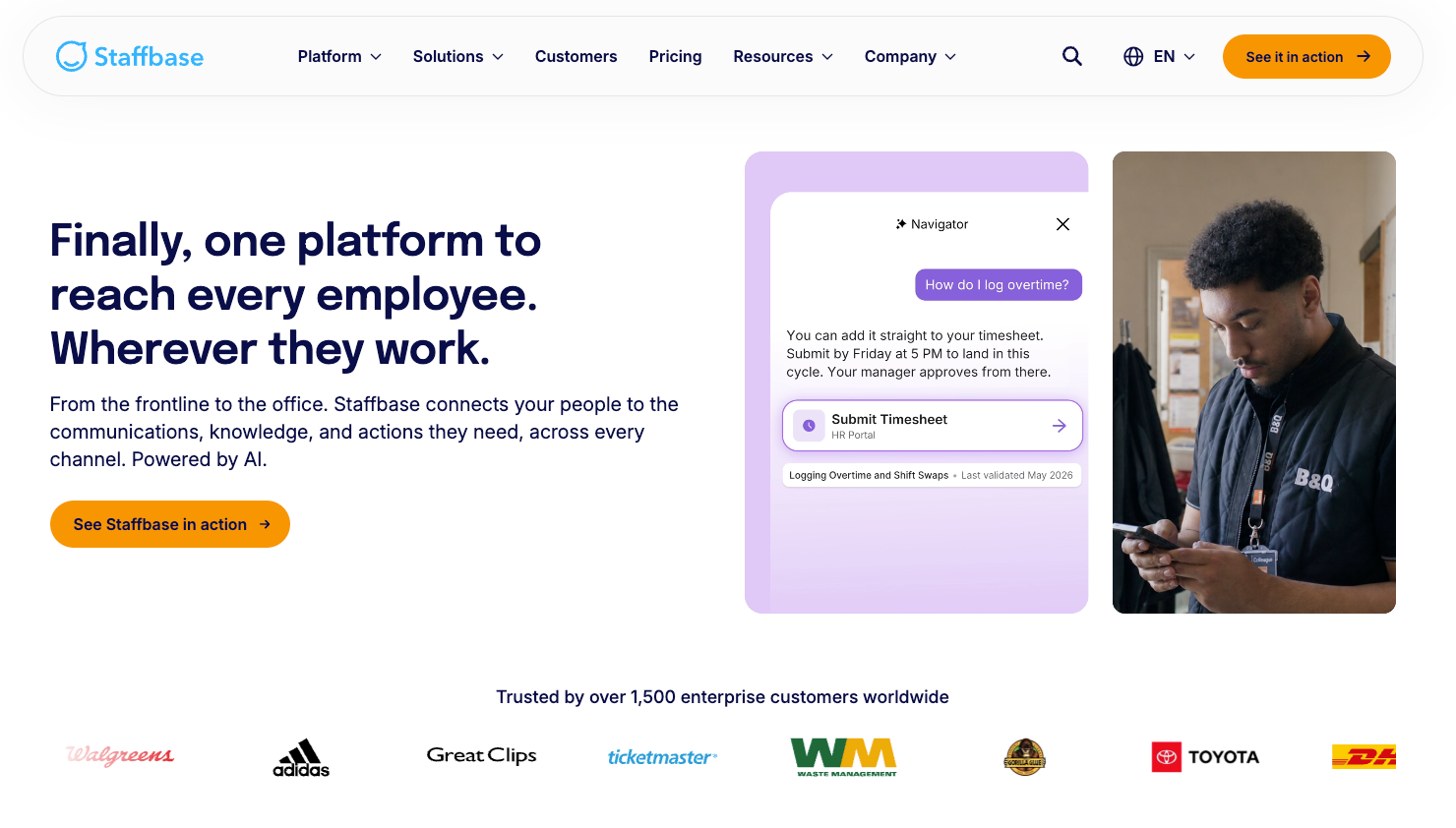
Why we picked it: Staffbase covers a branded employee app, intranet, email, SMS and digital signage from one contract across 75+ languages, for around 2,000 customers, with the approval workflows and editorial controls a large comms function needs. Where HubEngage is broad and light, Staffbase is broad and heavy.
Best for: Enterprises above 5,000 employees with a comms team large enough to operate it.
Watch out for: A large step up in cost. Reviewers commonly report renewal pricing rising at year two, so fix years two and three at signature.
Pricing: Quote-based, enterprise tier.
3. Simpplr: Best for organizations whose real need is a modern intranet
Why we picked it: If the module you actually used was intranet content, Simpplr does that job properly with AI search across connected business systems. Reviewers repeatedly praise how quickly non-technical teams launch and manage it.
Best for: Companies where the underlying problem is that information has nowhere findable to live.
Watch out for: Reviewers note limits on design flexibility and layouts that feel similar between customers. It is a pull channel, so employees have to visit.
Pricing: Quote-based.
4. Workvivo: Best for community and peer recognition
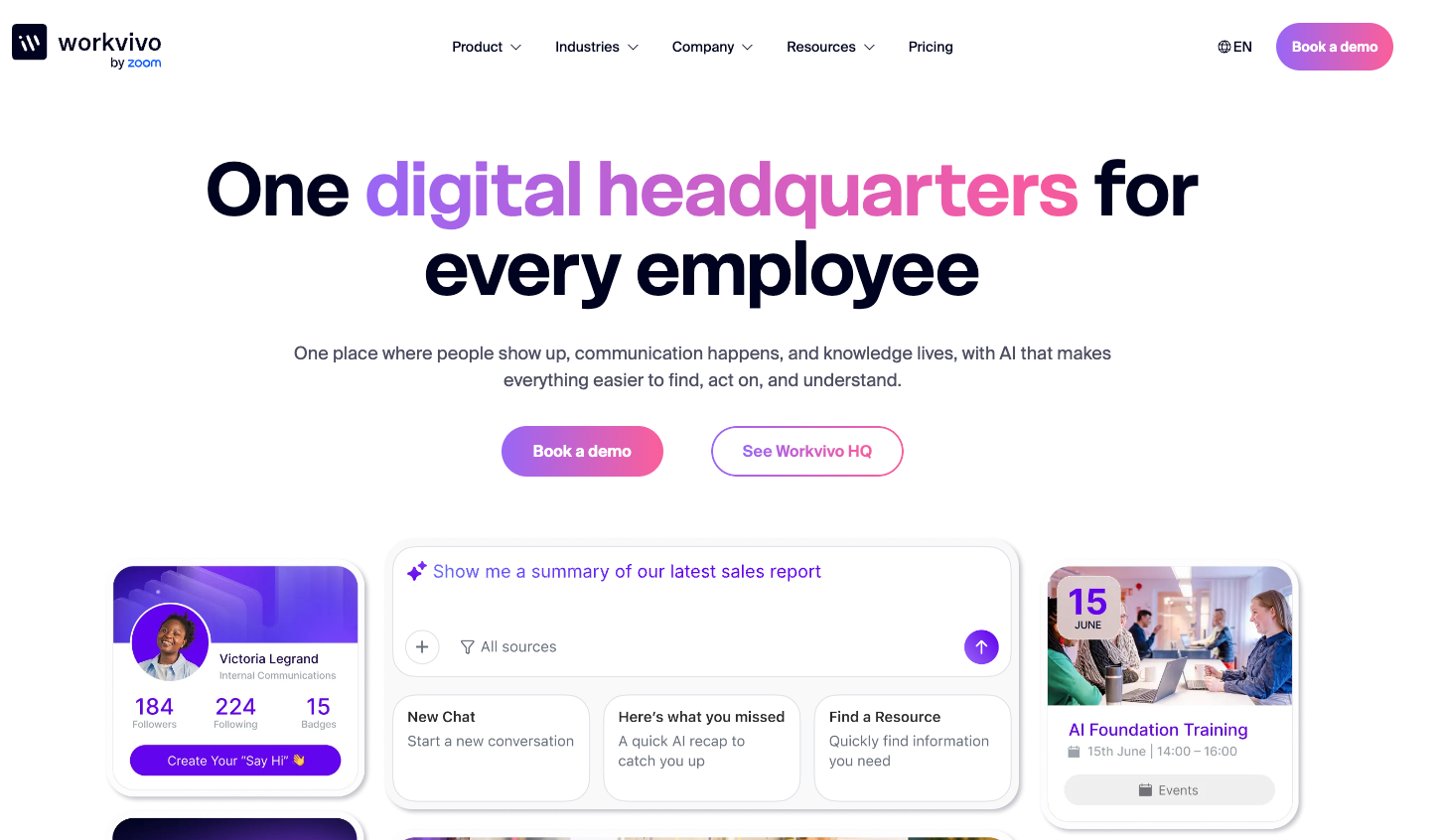
Why we picked it: Workvivo, now part of Zoom, is built around a social feed with recognition, community spaces and a people directory, and reviewers describe it as needing almost no training. On recognition specifically it feels more natural than a module bolted onto a comms platform.
Best for: Organizations where participation and culture are the objective.
Watch out for: Reviewers report adoption difficulties at larger employee counts and notification volume. Lifecycle automation off HRIS data is limited.
Pricing: Quote-based.
5. Poppulo: Best for enterprises running digital signage
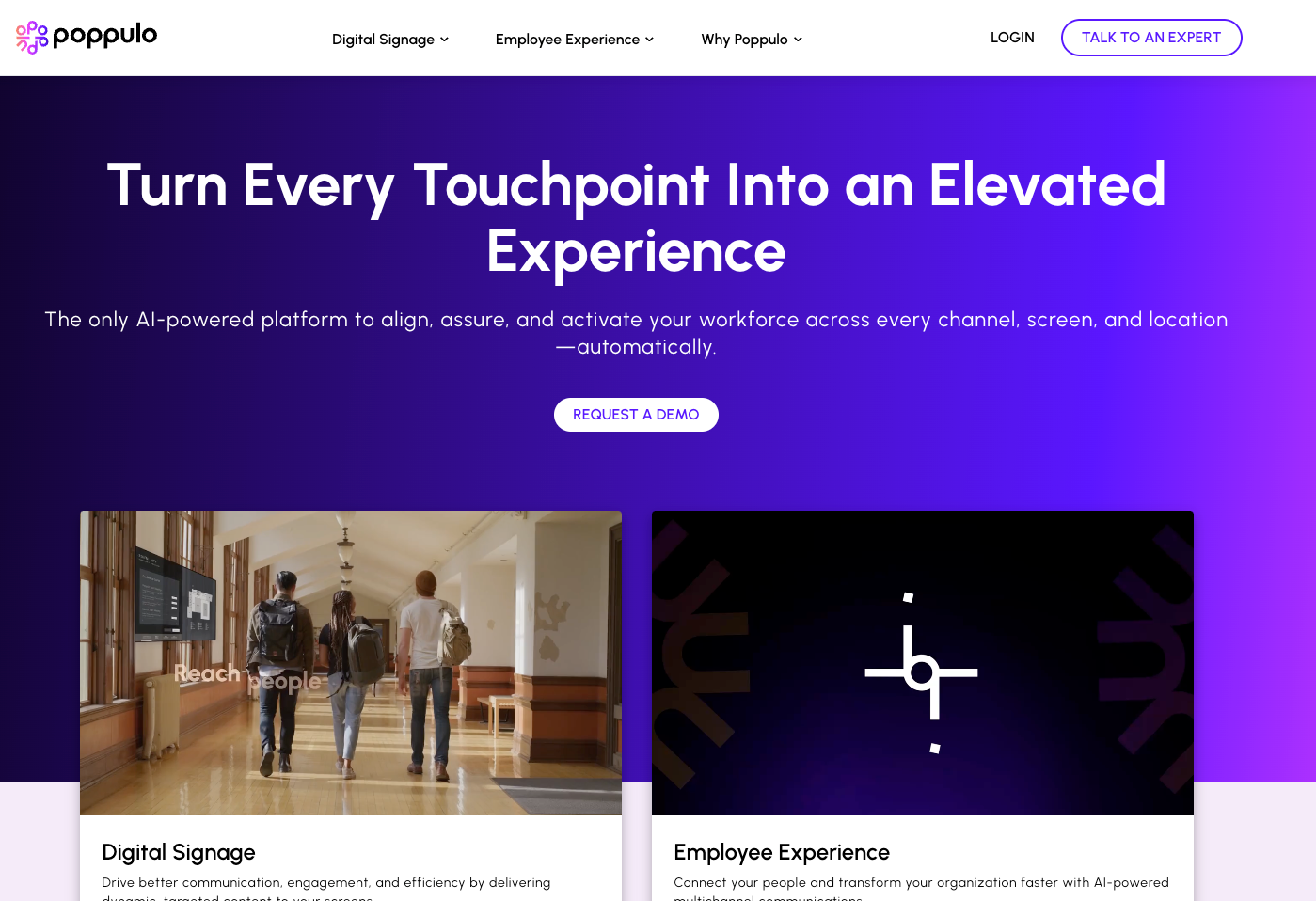
Why we picked it: Poppulo runs email, mobile comms and digital signage from one system with cross-channel analytics as its strongest card, with 4,500+ customers. If signage was the HubEngage module you leaned on, this is the serious version of it.
Best for: Large enterprises with physical spaces and dedicated comms resource.
Watch out for: Reviewers describe the email builder as rigid and note a learning curve on advanced campaigns. Pricing is opaque and grows by module.
Pricing: Quote-based, enterprise tier.
6. ContactMonkey: Best for teams where internal email is the priority channel
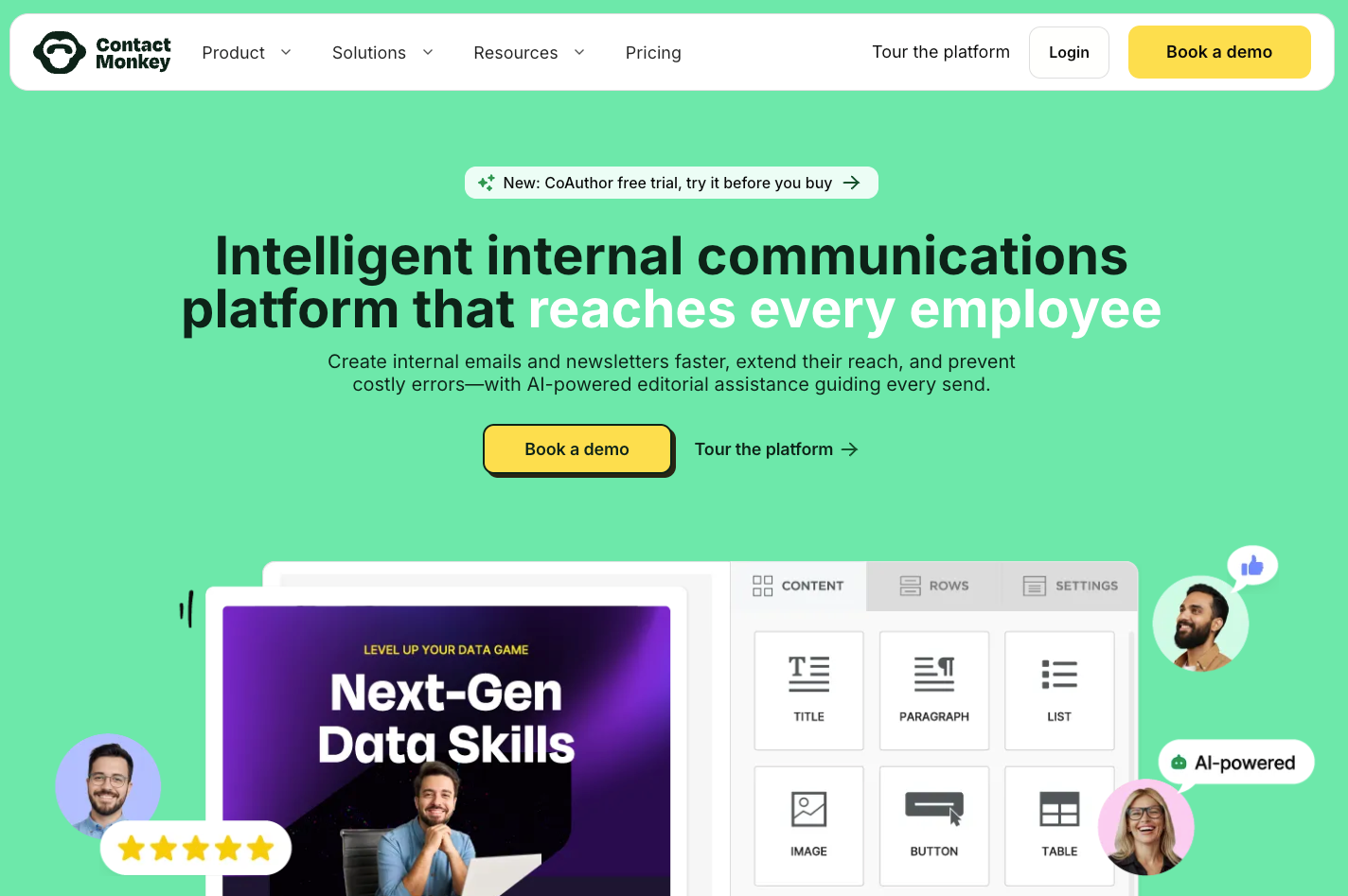
Why we picked it: ContactMonkey works inside Outlook and Gmail with a drag-and-drop builder, 600+ templates and analytics down to read time and click maps. It is deliberately narrow, and on email it goes deeper than any multi-channel platform here.
Best for: Comms teams whose workforce genuinely does live in the inbox.
Watch out for: Email and SMS only. No app, no signage, no intranet, no print, no recognition.
Pricing: Quote-based.
7. Blink: Best for mobile-only frontline workforces
Why we picked it: Blink starts from the phone, combining a feed, a content hub and access to workplace tools in one app built for people who have never had a work email address.
Best for: Healthcare, retail and field-service organizations that are genuinely mobile-only.
Watch out for: App adoption is your project. Content creation and HRIS-driven automation are lighter than a purpose-built platform.
Pricing: Quote-based.
8. Connecteam: Best for small deskless operations under 500 employees
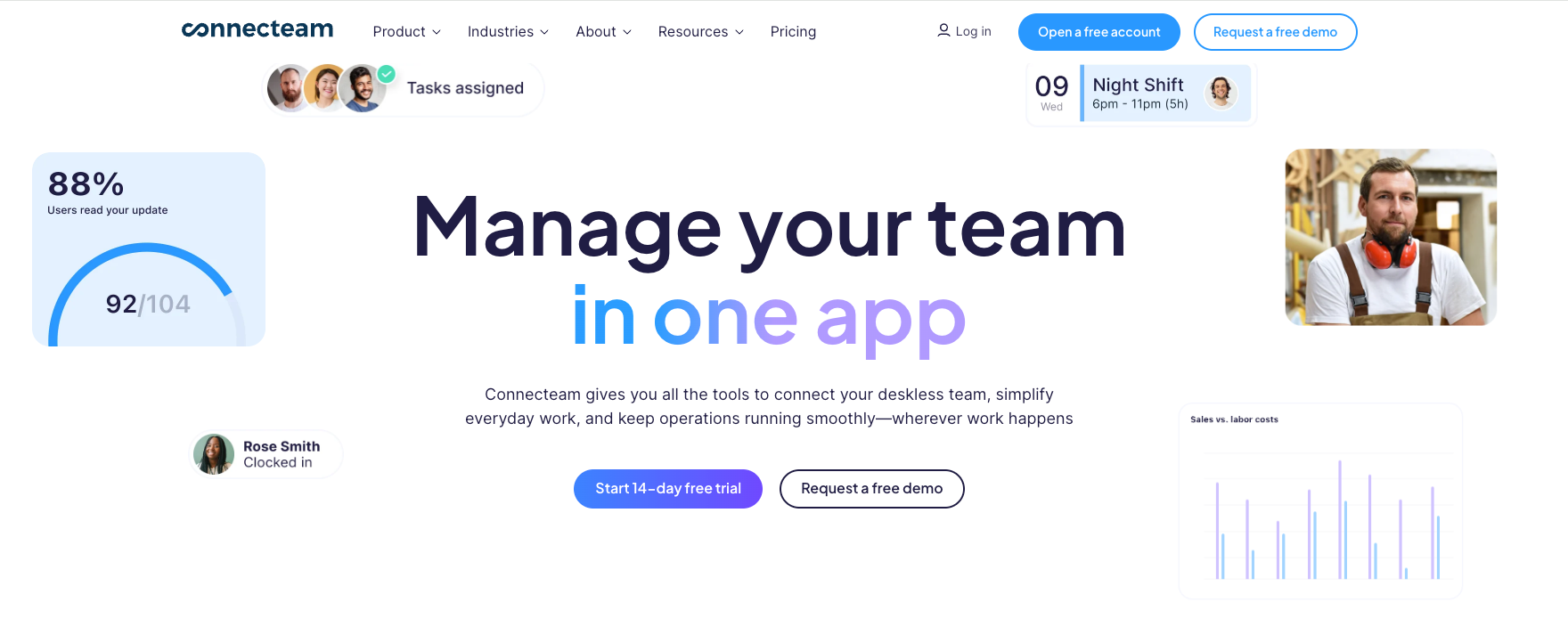
Why we picked it: If HubEngage was already at the affordable end and you need cheaper still, Connecteam bundles chat, announcements, scheduling, time tracking and training with a free tier for up to 10 users and published pricing above that.
Best for: Frontline operations under about 500 employees where operations and comms are the same job.
Watch out for: Per-hub pricing means multiple subscriptions. Reporting is basic, integrations are limited, and reviewers frequently flag notification reliability.
Pricing: Free for up to 10 users. Paid hubs start around $29 per month billed annually for the first 30 users.
What should you look for in a HubEngage alternative?
The right HubEngage alternative depends on whether you need more depth or a different shape. Five questions get you there.
- Which modules did you actually use? Be honest, then shop for those. Paying for eight capabilities and using two is how organizations end up in this search in the first place.
- Who makes the content? If the answer is one person with Canva and no design background, prioritize content generation over channel count. Distribution is the easy half.
- Does it read your HRIS? Named integrations with Workday, ADP, BambooHR or Active Directory decide whether onboarding, promotion and anniversary programs run themselves.
- How much independent evidence can you find? Count third-party reviews and analyst coverage before you commit. Thin evidence is not proof of a weak product, but it does mean you are underwriting more risk.
- What is the real per-employee cost at your headcount? Check minimum seat counts and which modules are included versus billed separately. Headline per-user pricing rarely survives contact with a real quote.
How we chose these HubEngage alternatives
We built this list from platforms that appear alongside HubEngage in live evaluations, drawn from review-site comparison data and buyer conversations. Each was assessed on content creation capability, channel coverage, depth of HRIS integration, analytics granularity, weight of independent evidence and realistic fit by company size.
Ordering reflects fit for one reader: a People, Internal Comms or Employee Experience leader at 500 to 10,000 employees with a distributed or frontline workforce and no in-house design function. On price at entry level, HubEngage beats most of this list, and on published pricing transparency it beats nearly all of it. Both points are stated rather than skipped. ChangeEngine publishes this comparison and names the two channels it does not cover.
FAQs: HubEngage alternatives
What is the best HubEngage alternative?
It depends on the gap. ChangeEngine suits teams needing marketing-grade content and HRIS-triggered program automation. Staffbase suits enterprises wanting an employee app with editorial governance. Simpplr suits organizations whose real requirement was a modern intranet all along.
Why do companies leave HubEngage?
The most common reasons are breadth without depth in content creation and lifecycle automation, limited independent review evidence to verify claims against, module and minimum-seat structures that make the real per-employee cost higher than the headline, and the reality that content production remains a manual job.
Is HubEngage cheaper than the alternatives?
At entry level, generally yes. HubEngage publishes low per-user pricing, which is unusual in a category where almost everything is quote-based. Whether it is cheaper at your headcount depends on minimum seat counts and how many modules you need, so model it against a real quote.
How does ChangeEngine compare to HubEngage?
HubEngage gives you many channels and modules at low cost and leaves content production with you. ChangeEngine generates the content itself through an AI studio with 5,000+ templates, then automates delivery across email, Slack, Teams, SMS and print off HRIS events, with analytics by department, region and tenure.
Which alternative includes employee recognition?
ChangeEngine automates milestone recognition with personalized messages and managed swag and e-gifting. Workvivo handles peer recognition inside a social feed. Staffbase and Poppulo cover recognition less directly. If recognition is the primary purchase, compare those first rather than a comms platform.