
Mill Rock Packaging is a private equity backed specialty packaging platform that has grown quickly through acquisition. The company started with one site in 2020 and has scaled to seven sites in five years, bringing together formerly independent and family run plants into a single platform of about 700 employees across multiple regions and time zones.
As Talent Director, Megan Taylor leads talent acquisition, learning and development, performance programs, and internal communication and engagement. Her remit is to bring great people into Mill Rock and build the programs that keep them there, while aligning seven legacy cultures behind one evolving story.
“Broadly speaking, my role covers everything from bringing great talent into our organization to programs that help keep that great talent here. More recently that has included employee engagement and communication, with ChangeEngine as our major resource to support those efforts.”
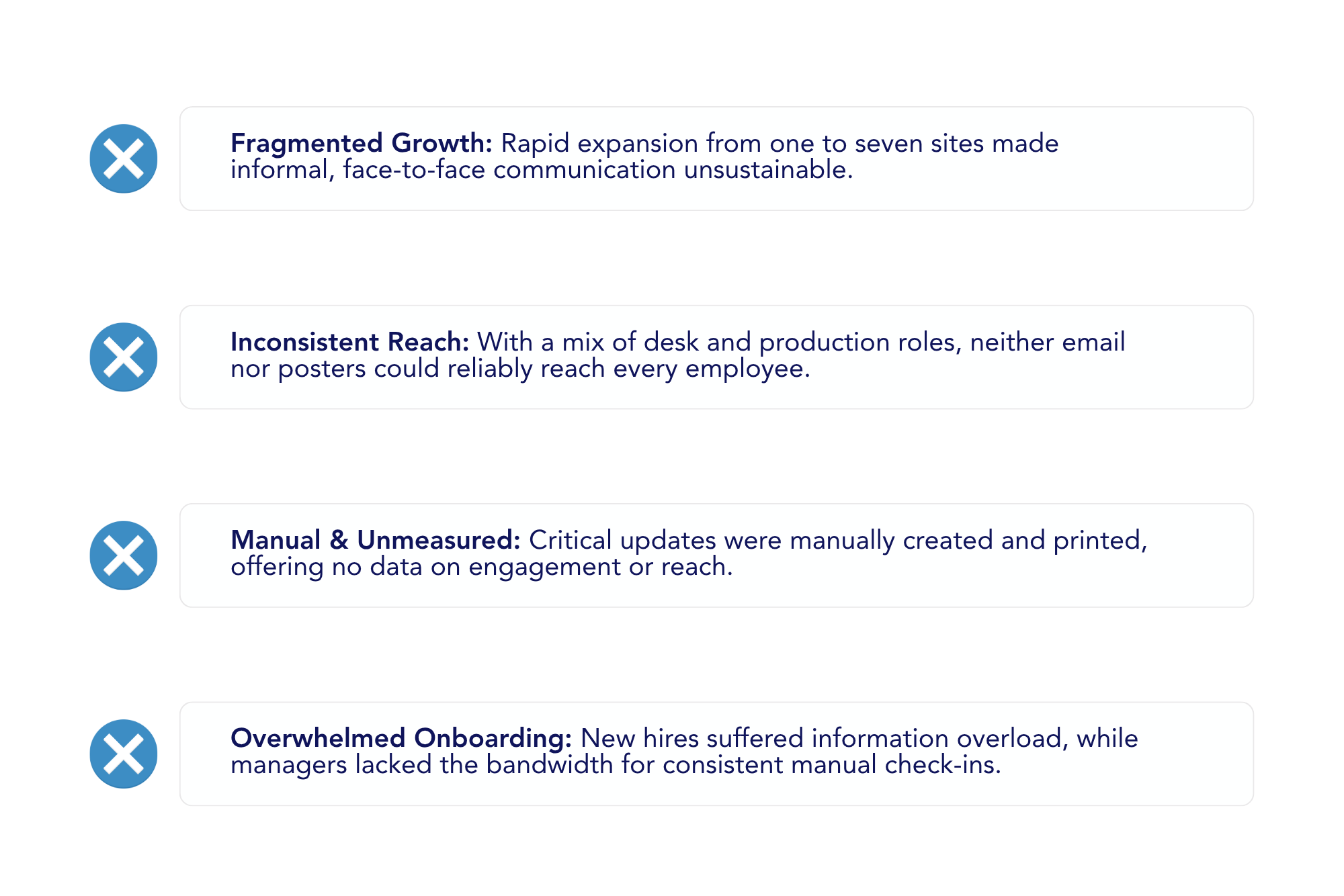
Mill Rock grew from one site to seven through acquisition. Many locations were formerly small, independent or family owned operations that relied on informal, face to face communication.
“When you are a smaller shop you can walk onto the floor and share a message. Once you are at about 700 employees across different time zones you start to have the challenge of how do we communicate consistent messaging.”
Employees across sites were asking the same things:
“We heard a lot of feedback from employees that we do not know what is going on.”
Some employees had email, some did not. Some worked at desks, others on the production floor. There was no single way to reliably reach everyone.
“You did not have the ability to just send out an email and update everybody or put up a poster and update everybody. A lot of employees were getting missed in communications.”
Important initiatives, like the Continuous Improvement (CI) newsletter, safety campaigns and event invites were:
“We had no ability to understand what people were engaging with. Were people opening the CI newsletter, were they using it.”
New hires were flooded with information in their first days and retained “maybe 20 percent” of what they heard in orientation. There was no structured way to reinforce key messages over time.
Production managers often had 30 to 50 employees on their teams and frequent new hires. Expecting them to remember every 30, 60 and 90 day check in and every reminder was not realistic.
With ChangeEngine, Megan’s team now segments by production vs non production, location and role, and uses an omni channel approach:
“We know that our production employees are best accessible via SMS text message. We know that our non production employees generally prefer email. We are able to tailor messages for each of those groups from one platform and keep a consistent tone that is true to who we are as an organization.”
Instead of overwhelming new hires in week one, Mill Rock has mapped an onboarding journey across the first month to month and a half:
“We have been able to be strategic about what information they need at what point in their onboarding journey and automate sending it. We do not have to put reminders on calendars, it is just automatically getting sent.”
This is especially important in plants where a single production manager might have 30 to 50 people and new hires joining every week.
The CI program is central to Mill Rock’s quality and efficiency goals. The CI leader previously created quarterly newsletters in Word and attached them to emails or printed them for break rooms, with no way to see who read them.
With ChangeEngine, Mill Rock now:
Most importantly, they can now see:
“There was actually a tremendous amount of engagement electronically, which was a wonderful thing. Now when we go to do it again we can tailor the content based on what employees actually engaged with instead of just assuming.”
Mill Rock used ChangeEngine to run a summer safety campaign with weekly messages on:
“We got quite a few messages back from employees, especially non production staff, saying thank you so much for this message. That kind of feedback shows the genuineness and intention of the message really did come through.”
For the company barbecue, Mill Rock:
The event team could then download a clean spreadsheet with accurate counts instead of collecting paper sign up sheets.
“We were able to see people go in and sign up after reminders. It was a better experience for planners and for employees, especially those who do not come into an office every day.”
For birthdays and work anniversaries, ChangeEngine:
“Sometimes just the barrier of trying to create the message deters someone from sending it. ChangeEngine takes that barrier out. Managers can send something meaningful very quickly, and employees have said I have never gotten anything like this before.”
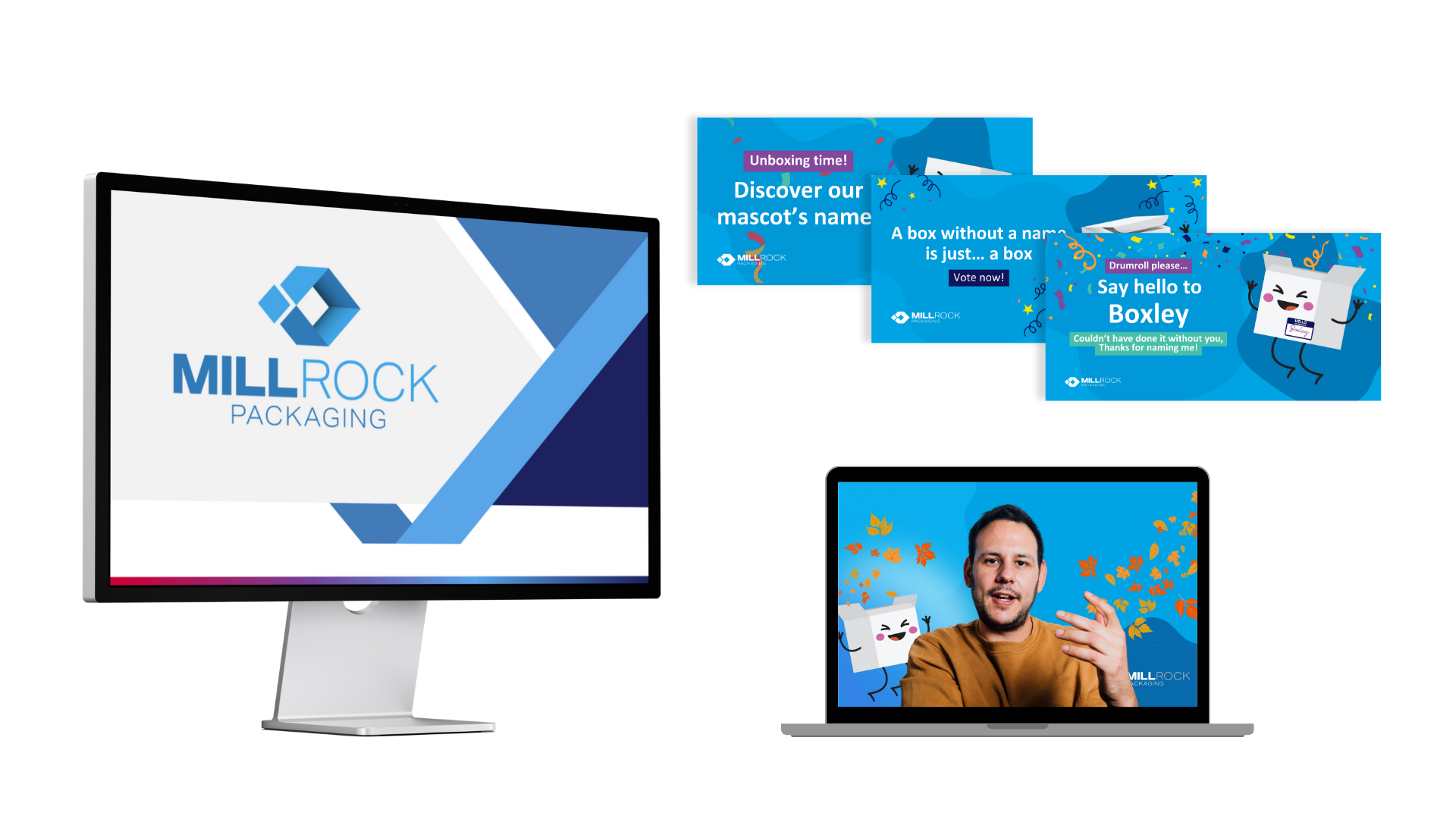
During implementation, the ChangeEngine team suggested a mascot to help unify culture and bring some fun into internal comms. Mill Rock adopted and refined an existing illustration into Boxley, then ran a naming campaign across all sites.
ChangeEngine helped write a backstory about Boxley being “created” on the packaging floor, tying him directly to Mill Rock’s work and machines.
“People really had fun with it and we got more engagement than we expected. Boxley serves as a connection point for our culture and helps bring a little bit of fun and energy to our communications.”
In the first year with ChangeEngine, Mill Rock has turned ad hoc, site specific communication into a coordinated, segmented system that:
“Our leadership team invested in ChangeEngine in a year when we were being very careful about where we spent money. They said, we need this, we hear our employees, we know we need to build trust with them.”
Employees now receive clear updates on:
Through safety campaigns, CI newsletters, onboarding journeys and Boxley themed culture communication, employees see that the company is investing in them, not just sending “check the box” messages.
“If you do not know where a company is going and you do not feel like you can trust the company, you are not going to stay. Through these types of communications we can show who Mill Rock is and where we are going. That relays back to engagement in a very real way.”
By spreading onboarding messages over several weeks, Mill Rock:
This improves early experience for both employees and managers and reduces the risk that overwhelmed new hires disengage or leave.
With analytics on CI newsletters, safety campaigns and other messages, Mill Rock can:
“We get a dashboard that gives us information down to whether an individual employee clicked and opened something. For policies and procedures that is huge.”
Automations around events and milestones save hours of planning and coordination while creating a better experience:
“It is not just about getting a message out. It is about building trust with the organization, which connects directly to how important the company is to the employee and how invested they are in their work.”
For Megan and Mill Rock’s leaders, the connection from communication to business outcomes is now clear:
“Ultimately if we have invested, engaged employees, the statistics will show you they are working harder, working smarter and working better. That relays back to productivity and profitability. When you feel like the company cares about you, you care more about the company and the work you are producing for the company.”
Mill Rock’s story shows how a growing, acquisition driven company can use automation and AI not to replace the human touch, but to scale it across seven sites and 700 people, strengthening culture, performance and long term value.


See ChangeEngine running with your own programs
Teams using ChangeEngine save ~20 hours per new hire. Book a demo to see onboarding, recognition or your next big rollout sent across email, Teams, Slack and SMS.

ChangeEngine is employee communication software for People, HR and internal comms teams. It turns one message into email, Slack, Teams, SMS and print, triggers programs like onboarding from your HRIS, and shows you what landed.
Rated on G2


© ChangeEngine. All rights reserved.
Employee communication software for People and HR teams


