.png)
It’s 10:00 a.m. on a Tuesday, and the HR team at a mid-sized manufacturing plant hits “send” on an important policy update. The email is crisp, the message is clear, and the new safety protocol is critical. But by noon, confusion is spreading on the floor. Why? Because 60% of the workforce—those who started their day at 5:00 a.m.—are already home, their phones silent, their inboxes unopened. The message, so carefully crafted, has missed its mark. This isn’t a one-off; it’s a pattern we’ve seen play out across more than a hundred manufacturing companies. If you only send by email, you’re missing half the floor. In manufacturing, timing and channel aren’t just details—they’re everything. So, how do you reach every shift, every worker, every time?
What’s Broken: The One-Size-Fits-All Communication Trap
For years, HR and People Ops teams have relied on the same playbook: send an all-staff email, maybe post a flyer in the break room, and hope the message trickles down. But the reality of a 3-shift operation is far messier. The first shift clocks in before sunrise and leaves before lunch. The second shift overlaps just enough to catch the tail end of a manager’s update. The third shift? They’re often left in the dark—literally and figuratively.
This isn’t just inconvenient; it’s risky. Missed communications mean missed safety updates, unclear policy changes, and a workforce that feels disconnected from HQ. The old approach assumes everyone works the same hours, checks the same channels, and has the same access to information. In manufacturing, that’s rarely true. The result? Critical messages get lost, compliance suffers, and employee trust erodes.
The Shift: Meeting Workers Where They Are
Forward-thinking manufacturing teams are waking up to a simple truth: what works for HQ doesn’t work for the floor. The best leaders aren’t just sending messages—they’re designing communication around the realities of shift work. They’re asking: When are people actually on the clock? Which channels do they use? How can we make sure nothing gets lost in translation?
Take one of our clients—a large manufacturer with three shifts and a workforce spread across multiple sites. They’d been rolling out new policies via email, only to find that engagement was abysmal. When they dug deeper, the problem was obvious: by the time the message went out, most of the first shift was gone, and the third shift wouldn’t see it until hours later (if at all). The solution wasn’t more emails. It was smarter, shift-based communication.
The Smarter Way: Communication Built for the Way People Work
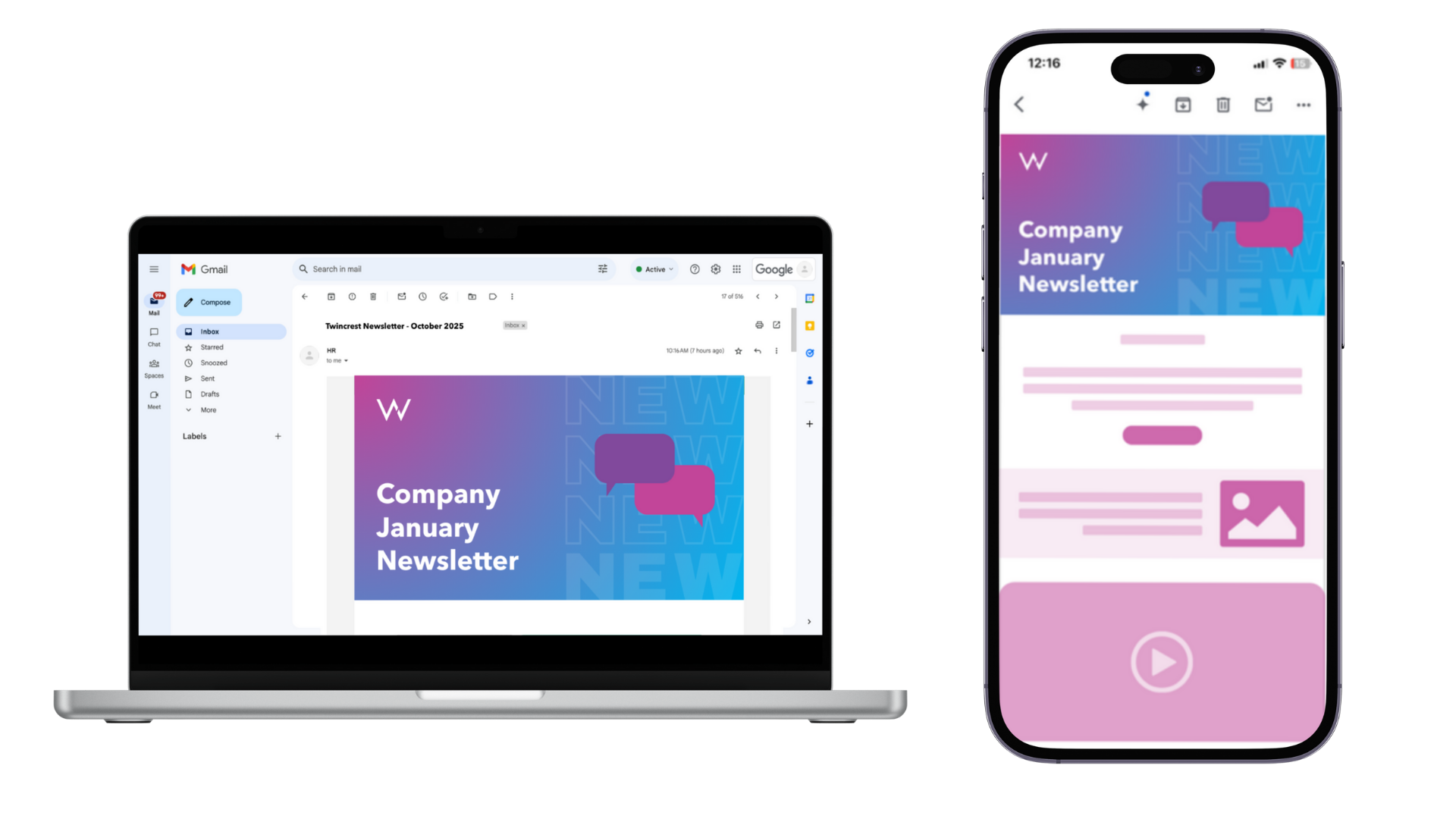
That’s why we built ChangeEngine. Our platform lets HR teams plan communications by shift, choose the right channel—SMS, email, Teams, or even print—and actually track what gets seen. No more guessing. No more missed messages.
Picture this: a safety update needs to go out to all shifts. Instead of blasting an email at 10:00 a.m., the HR team schedules SMS alerts for the first shift at 4:45 a.m., Teams messages for the second shift at 2:00 p.m., and prints a summary for the third shift’s break room. Each message is timed to hit just before the shift starts, when workers are most likely to see it. The platform tracks who’s opened, read, or acknowledged the update—giving HR real-time insight into what’s working and what’s not.
One of our manufacturing clients used this approach to roll out a new PTO policy. Instead of a single email, they sent targeted messages to each shift, using the channels those teams preferred. The result? 98% acknowledgment within 24 hours, zero confusion, and a smoother transition than anyone expected.
The Impact: More Than Just Messages
When communication matches the way people work, everything changes. HR teams save hours chasing down signatures or clarifying updates. Managers spend less time firefighting and more time leading. Most importantly, employees feel seen and heard—because the company is speaking their language, on their schedule.
The business benefits are real. Compliance improves, because no one misses a critical update. Engagement rises, because workers know what’s happening and why. Trust grows, because communication isn’t just a top-down broadcast—it’s a conversation. And when the next big change comes—whether it’s a new policy, a safety protocol, or a shift in operations—the groundwork is already laid for a smooth rollout.
One plant manager put it best: “For the first time, I know my team is actually getting the message. Not just the office folks, but everyone. That’s a game changer.”
Closing: Rethinking the Rhythm of Communication
If you’ve ever wondered why your carefully crafted messages don’t seem to land, maybe it’s not the content—it’s the cadence. In manufacturing, timing and channel are as important as the message itself. The smartest teams are moving beyond one-size-fits-all. They’re building communication strategies that flex with the rhythm of the floor.
So, what would it look like if your communications truly matched the way your people work? If every shift, every worker, every message was right on time? At ChangeEngine, we’re helping manufacturing teams make that shift—one message, one shift, one conversation at a time.
Ready to see how smarter communication can transform your operation? Let’s talk.